
For slate craftspeople
The roof is your craft. Let’s keep it that way — even when solar comes to it.
When a homeowner with a slate roof wants solar, you have a stake in what happens up there. The patented SlatePlate™ was built so panels go on without removing slate, with the array’s weight designed to carry to the roof structure, not the tiles — and so the person who knows the roof best stays involved. Got slate? Want solar? No problem.
Tell us about your shop and how you’d want to work together. No obligation — it’s a conversation.
Patented slate-roof mounting system (U.S. & E.U.) · made in the USA · built to respect the slate trade

U.S. & E.U.
patented mounting system
Solar is coming to slate roofs. The real question is who’s on the roof — and whether the person who knows the slate is in the room.
A role worth claiming
Solar on slate, with the roofer in the room
More homeowners with slate roofs are asking about solar. There’s now a method built for existing slate — and a manufacturer that wants the slate specialist involved, not cut out.
Solar is coming to slate — the question is who’s on the roof
For years the honest answer was discouraging: most solar hardware was designed for asphalt, and putting it on slate often meant removing tiles or drilling in ways that risk fracturing the material. You know how that ends — a call months later about a leak or a cracked field, and a finger pointed somewhere. The SlatePlate launched in 2017 for existing slate roofs, designed to combine no slate removal with no load transferred to the slate. Solar on slate doesn’t have to mean a non-specialist crew taking chances with a roof you’d have done differently.
Your expertise is the part that protects the roof
A mounting system, however well-engineered, still sits on real slate that has to be handled, flashed, and walked with care. That’s your domain. The slate-facing details — sound tiles in the array footprint, ridge and valley condition, chimney flashing, skylight integration — are exactly the kind of work a slate specialist should own. The system makes solar possible on slate; the roofer is what keeps the slate right. Two different jobs, and we don’t pretend otherwise.
A cleaner division of labor — and possibly a place for you in it
Solar Slate Solutions is a manufacturer, trainer, and installer. There are a few honest ways a slate roofer and a solar project can intersect: you may have homeowners (your clients) who’d benefit from a referral toward a slate-capable solar path; you may want training so your own crew understands the method; or you may simply want to supply or stock the product for jobs in your area. Whether any of those becomes a formal arrangement — and on what terms — is exactly what a conversation is for, not something we’ll pretend to nail down on a web page. This page is here to open that door.
Why now
Two things are converging. Energy costs and homeowner interest in solar keep climbing, so the “can I put solar on my slate roof?” question is landing in front of roofers more often, not less. And the method to do it without sacrificing the slate now exists and is patented in the U.S. and Europe. The roofers who decide early how they want to relate to slate-roof solar — refer it, train for it, supply it, or stay clear of it on their own terms — are the ones who shape the outcome instead of inheriting it. It costs nothing to find out where you’d fit.
On the roof
Slate kept. Solar added. Nobody compromised the roof.
No tiles removed, the load designed to carry to the structure, and a slate specialist on the roof — with a clean, low-profile array at the end.


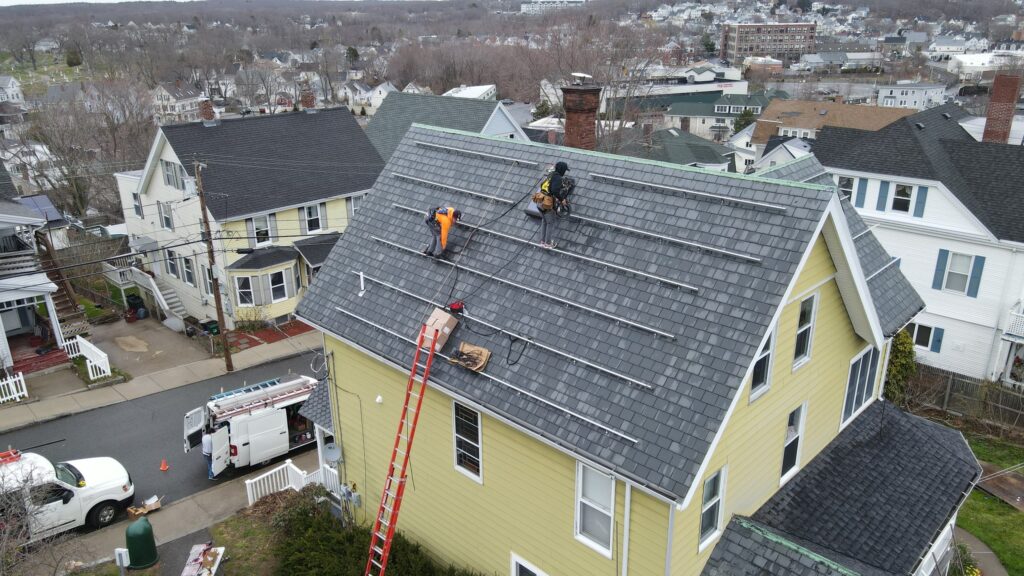
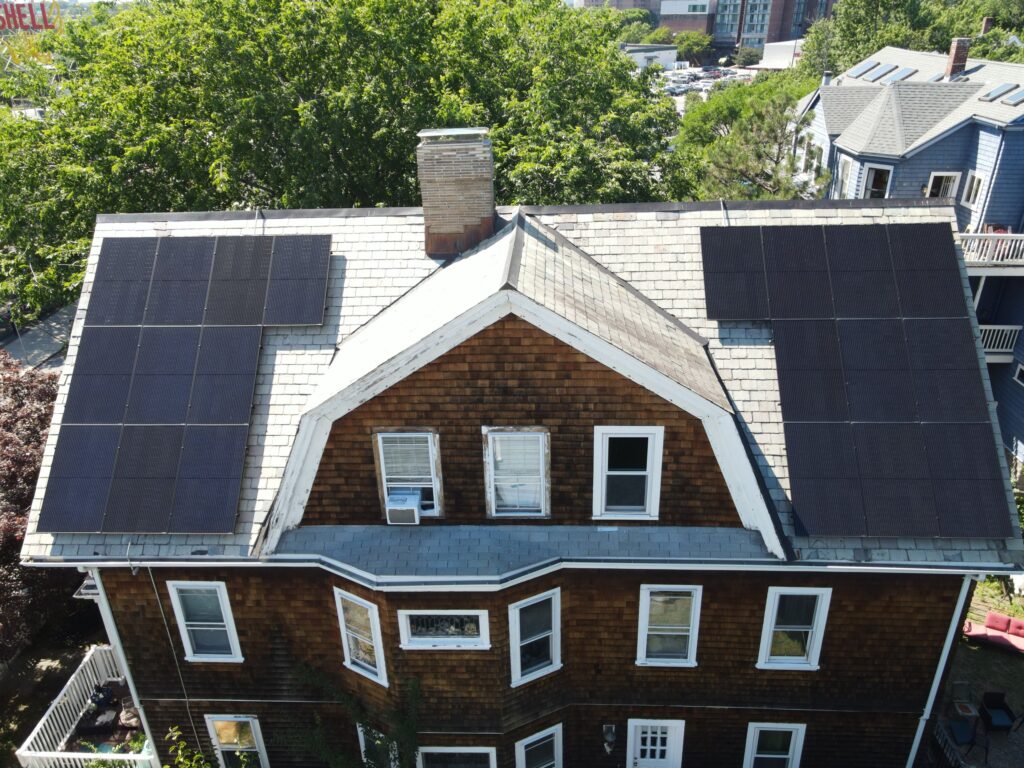

See it on real roofs
Installation videos
Real installs and product walkthroughs — play inline, no pop-ups.
Who’s behind the SlatePlate
A manufacturer that wants the roofer in the room.
2017
installer-built, in the field since
U.S. & E.U.
patented mounting system
0
slate removed to mount
Engineer-founded · made in the USA (Billerica, MA) · patented in the U.S. & Europe · trains installers in person, over Zoom, and on demand · supplies installers directly and through distributors.
From your point of view
How a slate-roof solar project works
Not every slate roof is a candidate, and feasibility depends on the roof’s condition, structure, local code/AHJ, and racking compatibility. Where the roof isn’t a fit, saying so is part of the job.
1
A homeowner raises solar — and trusts your read on the roof
The homeowner — your client — wants solar but doesn’t want to wreck the slate, and you’re the person they trust about the roof. You can flag whether the slate even looks like a candidate before anyone climbs up.
2
The slate gets an honest assessment
You (or a slate-skilled crew) evaluate slate condition, ridge and valley, flashings, and the structure beneath the array footprint. This is craft judgment, not a checkbox — and it’s where problems get caught early instead of after panels are on.
3
Slate prep and repair — your work
You handle the slate-facing work: replacing broken or compromised slates in the array area, and addressing ridge and valley, chimney flashing, or skylights as needed. The roof is left sound before solar touches it.
4
Solar mounts go in with the SlatePlate — the installer’s work, designed around the slate
A SlatePlate-trained solar installer (the crew that mounts the solar) — or a Solar Slate Solutions crew in New England — sets the mounts without removing slate, with the patented spacer designed to carry the load to the roof structure and weather protection built in at each penetration. You do slate; they do solar — and the hardware is built so their work respects yours.
5
Solar Slate Solutions supplies the product and the know-how
SSS manufactures the SlatePlate (made in the USA), supplies it, and trains installers on the method — in person, virtually, or on demand. If you want your own crew trained, or want to supply the product, this is where that fits. Stocking it for your area? That’s a distributor conversation.
6
Inspection, permitting, activation
The solar installer manages permits and the local AHJ and brings the system online. The roof underneath is sound slate you stand behind.
7
The roof keeps performing — and so does the relationship
The homeowner generates power; component, workmanship, and roof warranties apply through the project. And the roofer who protected the slate is the one the homeowner calls next time the roof needs care — solar or not.
Your concerns, answered
What slate roofers ask before solar touches the roof
The objections we hear most — answered straight.
“Some solar crew will crack this slate — and I’ll get blamed.”
That’s the real fear, and it’s fair: slate is fragile if it’s walked or drilled improperly, and not every solar crew is trained for it. The SlatePlate exists to take that seriously — a system designed for existing slate, installed without removing tiles, with a barrier between the lag and the slate that helps prevent fracturing over time and a spacer designed to send the load to the structure rather than compress the tile. It’s not magic, and careful foot-traffic discipline still matters — which is exactly why a slate specialist belongs on the job.
“Solar installers don’t understand slate. Why would I trust this?”
Because the company behind it isn’t a generalist solar shop — it’s a manufacturer, trainer, and installer focused specifically on slate. The whole reason the SlatePlate was engineered, and the reason installers are trained on the method rather than left to improvise, is that standard solar crews are understandably cautious with slate and shouldn’t be guessing. We’re not asking you to trust that “solar people get slate” — the method was built precisely because they often don’t, and your slate expertise is part of what keeps it right.
“Is this you replacing slate roofers?”
No — and we’d lose credibility fast if it were. The SlatePlate handles the solar-to-slate interface; it does nothing to replace the craft of laying, repairing, and flashing slate. If anything, a slate-roof solar project is a reason to get a slate specialist on the roof — to assess condition and handle the slate-facing work before and around the array. The system respects your trade; it doesn’t substitute for it.
“Will the roof leak where the panels attach?”
Weathertightness is engineered at each mount — the company describes layered protection using its patented flashing, an approved sealant, and weather-resistant mounting brackets. We’d rather state that plainly than over-promise: ask for the flashing detail and warranty specifics in writing for any job, and treat “weathertight” as an engineered design backed by a track record, not an absolute guarantee.
“What’s actually in it for me?”
Potentially a few things — and we’ll be straight that the specifics are a conversation, not a printed promise: a way to send slate-roof solar inquiries somewhere that won’t damage the roof (protecting your name with your own clients); training so your crew can be part of the method; or supplying or stocking the product for local jobs. Whether that turns into a referral arrangement, a training path, a supply relationship, or some combination — and on what terms — is what the partnership conversation is for.
“I’m not a solar contractor and I don’t want to become one.”
You don’t have to be. The division of labor is the point: you do slate, the trained solar installer does solar, and Solar Slate Solutions supplies the product and the training. You can stay entirely in your lane — slate condition, repair, and flashing — and still be the trusted voice on the roof. Or, if you ever want to go further, training exists. Your call, your scope.
“Should my homeowners rip off the slate before going solar?”
That sound slate is usually worth keeping. Well-maintained slate commonly lasts 75–100 years or more (industry), and the entire premise of the SlatePlate is that you don’t have to sacrifice the slate to get the solar. That aligns with what you already tell clients about preserving a good slate roof — it just adds “and solar is still on the table” to the advice.
“What about liability and warranties if I’m involved?”
There are clear, separable lines of coverage: manufacturer limited warranties on components including the SlatePlate, plus workmanship and roof warranties through the install. Your slate work and the solar installer’s mounting work are distinct scopes, which is part of why keeping a slate specialist responsible for the slate — and a trained installer responsible for the solar — protects everyone. Confirm the exact warranty terms and scope-of-work split in writing on any project.
“Where does this even work — and on what roofs?”
Solar Slate Solutions installs directly in New England and trains and supplies installers more broadly, so the geography depends on whether it’s an install, a training relationship, or a supply relationship. And no system makes every slate roof a candidate — feasibility still depends on slate condition, structure, code/AHJ, and racking compatibility. That’s exactly the kind of judgment a slate roofer is positioned to weigh in on early. For landmarked roofs, see our historic-preservation approach.
Wondering where you’d fit? Let’s talk about how you’d want to work together — no obligation.
Common questions
Slate roofer FAQ
Can you really put panels on a slate roof without damaging it?
That’s what SlatePlate is designed to do: attach the solar to the frame under the slate, without removing tiles, using our patented SlateSpacer that keeps the weight off the slate and a barrier that helps stop cracking over time. No roof job is risk-free, but the method is built so solar doesn’t have to hurt the roof.
Does SlatePlate replace the need for a slate roofer?
No. It only handles the connection between the solar and the slate. Checking, repairing, and sealing slate — and deciding whether a roof even qualifies for solar — is still a roofer’s job. A solar-slate project is a reason to bring in a slate expert, not a way around one.
How is the weight kept off the slate?
The patented SlateSpacer sits between the slate and the wooden frame, so the weight distributes to the frame, not the tiles. The SlatePlate sits between the bolt and the slate to help stop cracking over time. The system is patented in the U.S. and Europe.
How does it stay weathertight where it goes through the roof?
Everywhere a bolt goes through the roof, we seal it with several layers — the SlatePlate, which is the flashing; a waterproof sealant; and mounting brackets with rubber grommets. Ask us to spell out the sealing details and warranty in writing.
Who does the slate work versus the solar work?
They’re separate jobs. A slate expert handles the slate — condition, repairs, and sealing (broken tiles, ridges, valleys, chimney flashing, skylights). A SlatePlate-trained solar installer (or a Solar Slate Solutions crew in New England) sets the mounts and installs the solar.
Is there a referral or partnership program for slate roofers?
There may be a spot for you — referring customers, getting trained, or supplying the product — but we won’t lock down the exact terms on a web page before talking with you directly. That’s what the partnership conversation is for.
Can you train my crew on the method?
Yes — Solar Slate Solutions trains in person, and we’re currently working on a Zoom training. Whether that includes a roofer-specific track or a special setup for your shop is part of the conversation.
Can I buy or supply the product for my own jobs?
Selling the product is one of the company’s main offerings. The right setup — buying for single jobs or a bigger supply deal — depends on how much you do and where you are, so it’s worth a direct chat. A distributor path may also fit.
Where do you operate?
Solar Slate Solutions currently does its own installs in New England and the Tri-State area. We are slowly working our way into PA, MD, DC & VA. The company is based in Billerica, MA.
Does every slate roof qualify for solar?
No. Whether it works depends on the slate’s condition, the roof’s frame, local code, and southern exposure. A slate roofer is in a great spot to flag early whether a roof even looks like a candidate.
What warranties apply?
Makers’ warranties cover the parts (including SlatePlate), plus workmanship and roof warranties from the install. Confirm the exact wording and coverage in writing.
Is SlatePlate certified or listed?
It’s patented in the U.S. and Europe and made in the USA. Certified under the TAS 100a 110 mph wind-driven-rain test with no sealant needed.
There may be a place for you in slate-roof solar. Let’s talk about what it looks like.
A patented, USA-made method — built so the roofer stays the trusted voice on the roof.
You protect slate roofs for a living, and solar shouldn’t change that. The SlatePlate was built so panels go on without sacrificing the slate — and so the roofer stays involved. Whether you’d want to refer slate-roof solar, train your crew on the method, supply the product, or just understand it before it lands on your next job, the first step is a conversation — no obligation, no script.