
For campus facilities, sustainability & procurement
Bring historic campus buildings into your climate plan.
Slate-roofed and landmarked buildings have long been excluded from campus solar by default — the assumption being that you can’t mount panels without damaging the slate. The patented SlatePlate™ was engineered to change that: a documented, repeatable method that mounts solar without removing slate, with the array’s load designed to carry to the roof structure, not the tiles. So your most significant architecture can be evaluated, not automatically written off.
No obligation — request the documentation, or scope a single-building pilot.
Patented slate-roof mounting system (U.S. & E.U.) · documented, repeatable method · made in the USA

U.S. & E.U.
patented mounting system
The buildings most campuses leave out of the solar plan are exactly the slate and historic ones a method like this can reopen.
The opportunity on your campus
The square footage your climate plan keeps carving out
A meaningful share of campus roof area sits under slate or behind a historic designation — and gets quietly excluded from solar. A method built for slate puts those buildings back on the table for evaluation.
Carbon-neutrality goals — including your historic stock
Most institutions with climate-action commitments hit the same wall: slate and landmarked buildings get carved out of the renewable plan. Because the SlatePlate mounts without removing slate and directs the load to the structure rather than the tiles (company-stated), those buildings can be assessed on the same footing as the rest of your portfolio — on roof condition, structure, and orientation, not excluded on sight. Whether one proceeds still depends on engineering, code/AHJ, and where applicable historic review.
Built to fit facilities standards and procurement review
This isn’t a consumer product retrofitted for campus use. Solar Slate Solutions manufactures the SlatePlate, trains installers on the method, and installs directly in New England (company-stated) — so procurement can engage a single accountable manufacturer while still qualifying the installing contractor to your standards. It’s made in the USA, patented in the U.S. and Europe, and ships with manufacturer limited warranties on its components. For capital-projects offices, that means the kind of documentation a specification, a submittal, and a risk review expect — not a one-off field improvisation.
Educational and research visibility
An array on a signature slate or historic building is, by its nature, visible to students, faculty, alumni, and visitors — and it can do more than generate electricity. Depending on the building and your interest, it can support hands-on learning, monitoring dashboards, capstone or research projects in engineering, architecture, and sustainability, and a tangible story for advancement and admissions. Any teaching, research, or public-monitoring use should be scoped with the relevant departments and is independent of the installation itself.
Why now
Two clocks are running. Climate commitments and reporting cycles are pushing institutions to find renewable capacity wherever it can be sited — and the buildings most often excluded are exactly the slate and historic ones a method like this can reopen. At the same time, the federal incentive landscape is in active flux, which makes early evaluation and a documented pilot more valuable than a wait-and-see posture. Beginning with assessment and a single building lets you understand feasibility and economics on your own terms, before assumptions — about either the roof or the incentives — make the decision for you.
On the roof
Sensitive placement, documented detail
Low-profile arrays on secondary slopes, the mount on intact slate, the flashing detail, and the documentation a facilities review expects — on real slate.

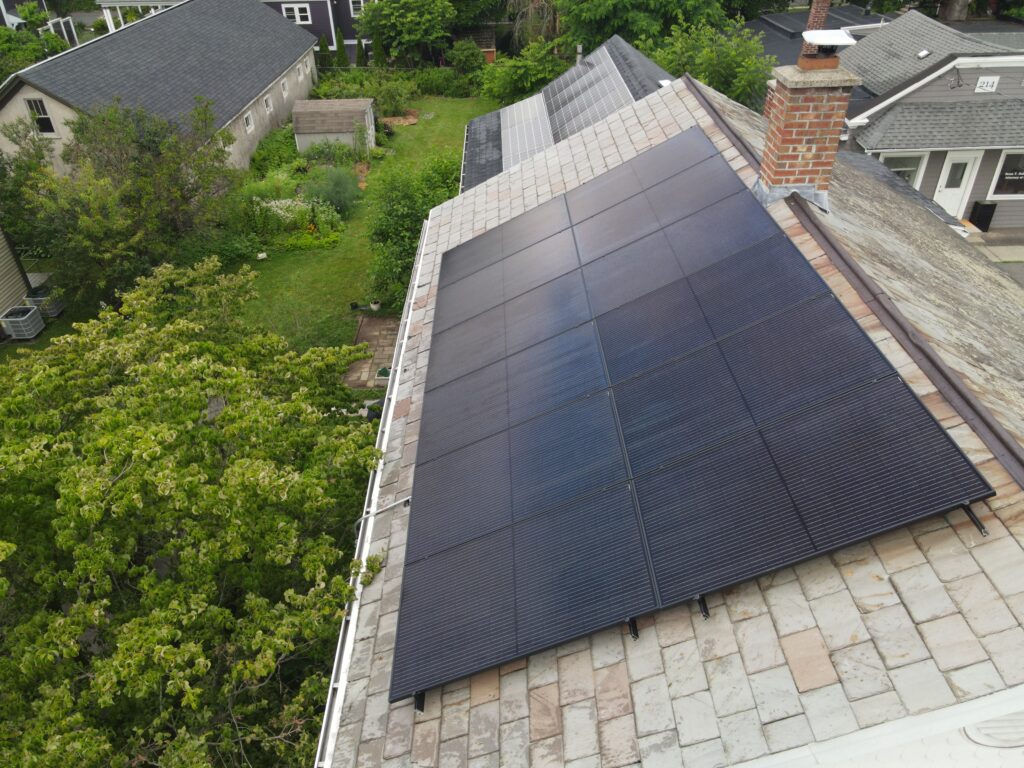


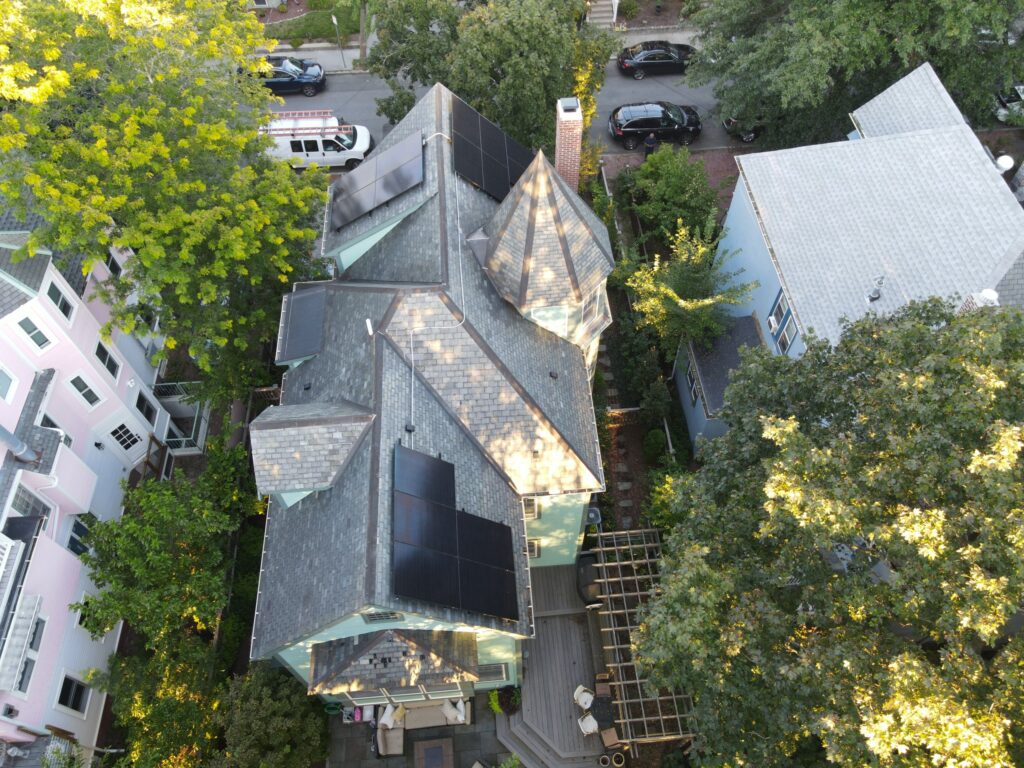
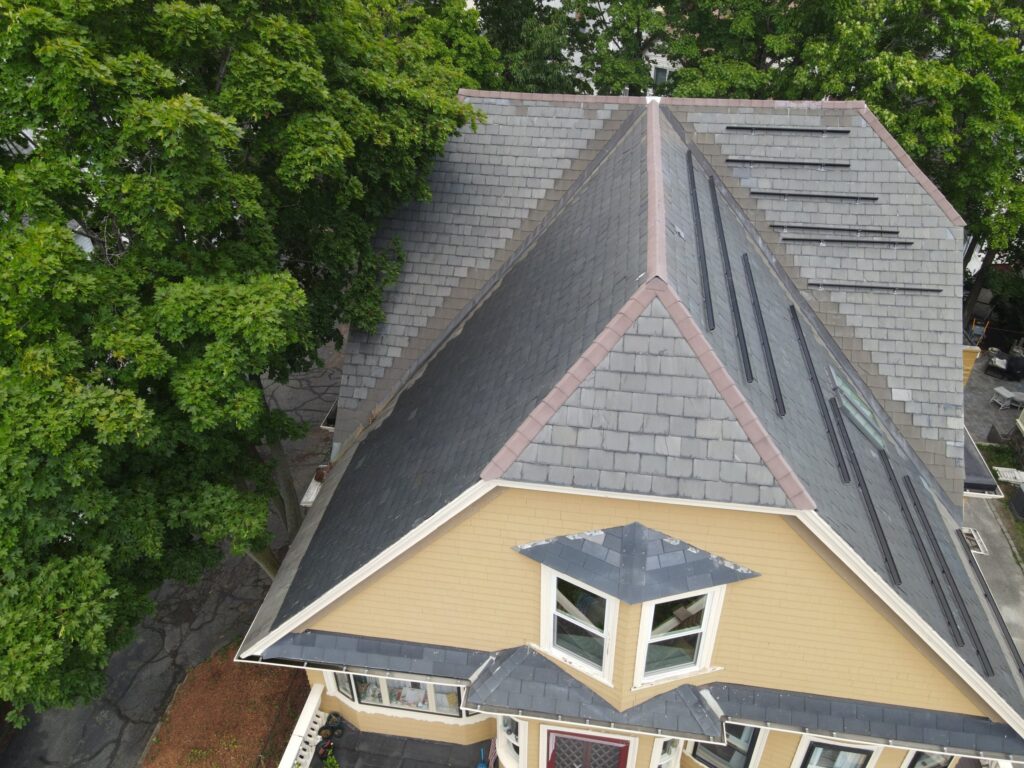


See it on real roofs
Installation videos
Real installs and product walkthroughs — play inline, no pop-ups.
Built for facilities and procurement review
A documented method, not a field improvisation.
2017
installer-built, in the field since
U.S. & E.U.
patented mounting system
0
slate removed to mount
Engineer-founded · made in the USA (Billerica, MA) · patented in the U.S. & Europe · trains installers in person, over Zoom, and on demand · supplies installers directly and through distributors.
From inquiry to portfolio
The project flow, from your institution’s point of view
A documented path with clear gates: your team owns procurement and access, a licensed engineer stamps the structural review, and Solar Slate Solutions supplies the product, documentation, and — in New England — the installation.
1
You request facilities & procurement information
You share your institution, role, the buildings or roof types you’re curious about, and whether you want to start with a pilot. Your team submits the request; a Solar Slate Solutions representative follows up with documentation and a working conversation — no obligation.
2
Facilities assessment
A representative reviews candidate buildings against the basics that drive feasibility — slate condition, roof geometry and orientation, shading, and access — and helps you shortlist a sensible pilot. Solar Slate Solutions assesses feasibility with your facilities staff; you provide building access and any existing roof records. Not every roof is a fit, and you’ll be told plainly when one isn’t.
3
Structural and engineering review
A licensed structural/engineering review confirms the roof and framing can carry the array and that the mounting approach suits the building. A qualified engineer — your retained engineer or one coordinated for the project — performs and stamps the review; Solar Slate Solutions provides product load and attachment information. This is a required gate, not a formality.
4
Procurement and vendor qualification
The project moves through your standard procurement path — specification, solicitation or sole-source justification as your policies require, insurance and qualification checks on the installing contractor, and review of warranty and documentation terms. Your procurement and risk offices run the process; Solar Slate Solutions supplies product specifications, warranty terms, and installer-qualification information, and in New England can serve as the installing contractor. Elsewhere, a SlatePlate-trained installer performs the work.
5
Pilot building
The approved pilot is installed: slates compromised within the array footprint are addressed, mounts are set without removing slate, and the array and electrical are completed. The SlatePlate-trained installing crew performs the work; a qualified slate roofer may handle slate repairs; your facilities team coordinates campus access, scheduling, and inspections.
6
Documentation
The project is documented as a repeatable internal standard — as-built drawings, product submittals, warranty registrations, inspection and permit records, and preservation documentation where the building is designated. The installer and Solar Slate Solutions provide product and installation documentation; your team incorporates it into facilities records and your capital-project archive.
7
Scale on your timeline
With a documented pilot in hand, facilities and sustainability can plan additional buildings, sequence them against capital cycles, and engage distributors for supply at scale where appropriate. Your institution decides scope and pace; Solar Slate Solutions and its trained network support each subsequent building — with each one still getting its own assessment and engineering review.
Your concerns, answered
What facilities and procurement leaders ask first
The questions a careful facilities, procurement, and risk review raises — answered straight.
“Can our landmarked or significant buildings even be considered?”
Often, yes — they no longer have to be excluded automatically. The SlatePlate mounts without removing slate, and the array and mounts can be removed and the slope returned to slate. National Park Service guidance holds that solar which is not visible — or only minimally visible — from the public right-of-way generally meets the Secretary of the Interior’s Standards, provided it doesn’t damage historic roofing (slate is named) or alter character-defining slopes. Designated buildings still require historic review, and we never claim a commission has approved any specific project. See historic preservation.
“How does this fit our procurement process?”
It’s designed to. Solar Slate Solutions can provide the inputs procurement expects — product specifications, warranty terms, and installer-qualification information — so the system can be specified, solicited, and reviewed under your existing policies. In New England the company can act as the installing contractor; elsewhere a trained installer performs the work and is qualified to your standards. The process gates — engineering review, insurance, documentation — are built into the project flow above.
“What about risk management and insurance?”
Every gate a careful risk review wants is in the path: a stamped structural/engineering review before installation, qualification and insurance checks on the installing contractor, manufacturer limited warranties on components including the SlatePlate, and standard workmanship and roof warranties through the install. Weather-event damage is typically addressed through property insurance, as with any roof asset. Confirm all coverage terms in writing as part of procurement.
“Will the documentation meet our facilities standards?”
That’s the intent of the pilot-and-document approach. A completed pilot produces as-built drawings, product submittals, warranty registrations, permit and inspection records, and — for designated buildings — preservation documentation, assembled into a standard you can reuse. Tell us what your facilities and capital-projects offices require, and we’ll align the submittal package accordingly.
“Is this scalable across multiple buildings?”
It’s built to scale through repetition, not heroics. Because the method is documented and the product is manufactured and supplied through distributors, a successful pilot becomes a template you can apply building-by-building on your own timeline. The same stewardship-plus-documentation logic guides peer institutions such as houses of worship with slate roofs. Each building still gets its own assessment and engineering review — scale comes from a repeatable standard, not from skipping diligence.
“How do we know the installing contractor is qualified for slate?”
This is the core problem the company was built around. Standard solar crews are understandably cautious with slate, so Solar Slate Solutions manufactures the SlatePlate, trains installers specifically on the method, and performs its own installs in New England (company-stated). For your projects you want a SlatePlate-trained installer, with a qualified slate roofer involved for any slate work — and we can help you identify trained professionals.
“How is the slate protected during and after installation?”
The system was engineered to combine no slate removal with no load on the slate — its patented spacer is designed to transfer the array load to the structural members and to form a barrier between the fastener and the tile to help prevent fracturing, with a weather seal at each mount (company-stated). Slates already compromised within the array footprint can be repaired or replaced as part of the project. Slate is durable — commonly 75–100+ years — but fragile if mishandled, which is exactly why a slate-specific method and trained crews matter.
“Will it leak?”
Weathertightness is engineered at each mount — the company describes layered protection using its flashing, an approved sealant, and weather-resistant brackets, and reports a strong track record (company-stated). For an institutional asset we’d rather under-promise: request the specifics of the flashing system and the exact warranty language as part of your review.
Wondering whether your slate and historic buildings could finally be in scope? Request the documentation, or scope a single-building pilot.
Common questions
Higher-education FAQ
Can solar be installed on a campus slate roof without removing the slate?
Yes — that’s the main point. The SlatePlate is the first system that leaves the slate in place and keeps the weight off it, attaching to the frame underneath. Whether any specific building works still depends on slate condition and structure.
Does a historic or landmark status rule a building out?
Not automatically. Solar that you can’t see (or barely see) from the street generally meets the national historic standards, as long as it doesn’t harm the slate or change key roof lines. Landmarked buildings still need a historic review, and no project should be called pre-approved.
How does the design protect the slate?
The patented spacer sends the panel weight to the roof’s frame instead of the tiles, and adds a barrier between the bolt and the slate to help stop cracking. Each mount is sealed against weather.
Who does and signs off on the structural/engineering review?
A licensed engineer — either yours or one arranged for the project — does the review and stamps it. (This just means a qualified engineer officially confirms the roof and frame can hold the panels.) Solar Slate Solutions gives the engineer the weight and attachment info they need. This review is required before anything is installed.
Who actually installs the system?
In New England, Solar Slate Solutions installs it. Elsewhere, a SlatePlate-trained installer does it, with a slate roofer for slate repairs. Either way, the contractor is checked against your standards through your normal hiring process.
How does this fit our purchasing and vendor rules?
It’s built to. The company gives you the specs, warranty terms, and installer info you need so the system can be written into a bid and reviewed under your policies. The project includes clear checkpoints — engineering review, insurance, and documentation.
What warranties apply?
The SolarSlate warranty covers the parts (including SlatePlate), plus the installer’s work-and-roof warranties; weather damage usually goes through property insurance. Get exact terms in writing.
Can a public university get federal incentives directly?
Possibly, through elective pay (also called “direct pay”). This lets tax-exempt and government groups — including public universities — get certain clean-energy credits as a cash payment after registering with the IRS first. The rules and deadlines have changed, so confirm current eligibility and timing with your finance and tax people before relying on any number.
Is the product certified to a recognized standard?
SlatePlate is patented in the U.S. and Europe and made in the USA. Any extra certification (like a UL listing) should be confirmed directly before you rely on it in a spec.
Can we start with one building before committing the whole campus?
Yes — a single-building pilot is the recommended path. It gives you the drawings, warranty terms, and paperwork you need to decide whether and how to expand.
Does it work with the panels and rails we’d choose?
Yes. SlatePlate is just the slate-roof connector — it’s used with standard rails and panels, not a replacement for them. The exact fit is confirmed during design and engineering.
Has the company been independently recognized?
The company says it’s been featured in AltEnergyMag and Roofing Magazine (worth confirming before you cite it). Note: its proof so far comes from Massachusetts homeowner installs — there are no college case studies, so don’t assume any.
Evaluate your slate buildings — start with one.
A patented, USA-made method — documented for facilities, procurement, and risk review.
Bring your slate-roofed and historic buildings into the same conversation as the rest of your campus. Request the facilities and procurement documentation, or scope a single-building pilot — and get an honest assessment of what’s feasible, what it would take, and how it could scale. Steward the architecture. Advance the climate plan.